|
|
Medical School Requirements
The best place to find information about medical
school requirements is from the school itself. However, most schools
have similar medical school prerequisites. Remember that just
taking these courses is just the beginning of what it takes to be
accepted to medical school. For more details on this, go to the
medical school admissions page. You'll need to do well in these
classes to get a good GPA and score well on the MCAT as
well.
Here is a basic outline of what schools will require:
-
One Year of Physics
-
One year of physics is a medical school
requirement by every school. This does not have to
be a calculus-based physics class, and the MCAT
does not test calculus-based physics. I took the basic
classes and did well on that section of the MCAT. Also,
as you go through medical school, you will realize that for most
fields a detailed knowledge of physics is not necessary,
although always one of the requirements for medical
school. One of the main exceptions to that is
probably radiation oncology, so it may serve you well to take
advanced physics if you are leaning in that direction.
-
I enjoyed my physics class as a medical school requirement.
I felt that it helped me understand what was happening in the
world around me. You will learn about laws of motion, gravity,
force, magnetism and other great concepts. Take your time to
understand the material taught in this one of the medical school
admissions requirements and you will have a better understanding
of why things happen in the world.
-
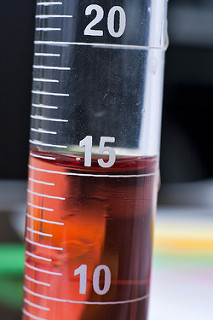
One Year of General Chemistry with Lab Work

Photo courtesy of Horia
Varlan
-
As with physics, this does not have to be an advanced
class, just the basic general chemistry. Make sure it does have
a lab component, however, as most schools will want this.
-
General chemistry is a one of the medical school
prerequisites, although you will not use a lot of chemistry as a
doctor. It will, however, it will be one of the medical
school admission requirements to understand this material
well for the MCAT.
-
In this one of the medical school prerequisites, you will
again get to learn about the world around you. One thing that I
enjoyed learning in this of the requirements for medical school
was about melting and boiling points. I felt like it was
information that I could think about immediately as I was
cooking my Ramen noodles in college.
-
One Year of Organic Chemistry with Lab Work
-
Again, same as the ones before. Does not have to be
advanced, but does need a lab. This is one of the
medical school admissions requirements and will give you
some help in understanding pharmacology once you are in medical
school.
-
In organic chemistry, you will be learning how chemicals
react to form other chemicals. In this of the medical school
admission requirements, you will actually make certain compounds
in the lab. I remember actually making the smell of cinnamon as
part of this medical school requirement. Pretty exciting
stuff!
-
One Year of Biology with Lab Work
-
This should include cell and molecular biology with the
corresponding lab classes. Genetics and physiology generally
fill this requirement as well, but check with the individual
schools and the MSAR to be sure.
-
Part of this of the medical school admissions requirements
might be biochemistry. Although biochemistry may or may not be
part of the medical school prerequisites, I would recommend it
as one of the unofficial requirements for medical
school. Biochemistry focuses on the chemical reactions that
happen in the body. This is a subject that may or may not be
heavily taught in your medical school and your
best medical school may not even list it as one of the
medical school admissions requirements. But, it will give you a
good basis for understanding some of the complex reactions that
occur in the human body. Click here for more information about
the medical
school curriculum.
-
Mathematics, Usually Calculus and Statistics

Photo courtesy of
LaSombra
-
Most schools will require one year of calculus and many
require at least one course in statistics. This requirement does
vary by school, so best to check specifics in the MSAR.
-
Although calculus is a medical school requirement, you will
never use it during medical school. You will
also not use it on the MCAT.
-
On the other hand, having statistics as one of the medical
school admissions requirements is a very wise idea. If your
medical school does not list statistics as one of its medical
school prerequisites, you should probably take it
anyway.
-
A big part of being a doctor is understanding clinical
trials. Most of the time, this requires at least a basic
knowledge of statistics. You need to understand what statistical
significance means and understand when statistical significance
translates to real-world significance and when it doesn't. This
is definitely one of the more important requirements
for medical school.
-
English
-
Most schools list an English Composition class as one
of their medical school admission requirements.
Communication through writing is an important part of medicine
and will serve you well. Some medical school requirements also
include a literature class, though that is less common. For this
requirement, make sure you check the MSAR for which classes
count or do not count.
-
Knowing how to write well will help you in medical school
as well. At some schools, a course called PBL is part of the medical
school curriculum. For this course, you will be writing
between one and two pages about a particular subject every week.
Taking writing as a serious medical school requirement will
prepare you to be able to write these "learning issues" as
they're called quickly and effectively.
Those are the basic medical school requirements for most schools.
They will give you a good base for medical
school education. Here are a few other classes that I would
suggest to really set yourself up well for medical school:
Mike's Picks
-
Anatomy
-
This is generally not one of the medical school admissions
requirements, but will definitely give you an advantage going
into medical school. You will spend much of your first year and
a good part of your second in the anatomy lab. The more familiar
you are with the material, the easier this will be.
-
The anatomy lab is a big part of medical school. Making
anatomy one of your personal medical school prerequisites will
save you a lot of time. You will also be a big help to your
peers. We had a group of four that worked together. One person
in our group was an expert in anatomy. This was a huge help to
the rest of our group and helped us understand the human body
much better. If you have this as one of your requirements for
medical school, that helper could be you!
-
Physiology/Pathophysiology
-
Most of your medical
education hinges on your understanding of how the body works
and what can go wrong with it. These classes will give you a
good introduction and will put you a step ahead in medical
school.
-
Physiology is the study of how the human body works. You'll
learn a lot about metabolic pathways and the specialized
functions of different organs in the body. It was one of my
favorite classes in college and is sometimes a
medical school requirement.
-
Pathophysiology is the study of disease and disease
processes. You'll learn about genetic changes that can mess up
those metabolic pathways, how cell growth can turn into cancer
and many other interesting things in this one of my unofficial
medical school admissions requirements.
As you can probably tell, most of these medical school
prerequisites are science-based. Probably the easiest way to
fulfill these requirements is to choose a science major. For my take
on choosing a major, click here.
Remember: These are general medical school requirements
that most schools have. For specifics, check the MSAR
and double check with the school.
A great resource for requirements is the MSAR, or medical
school admissions requirements. It is produced by the AAMC
(Association of American Medical Colleges) and is the best guide to
find out the specific requirements for schools, including the odd
classes that other schools don't require. It also gives you the
contact information for schools, the average GPA and MCAT, average debt, cost of tuition, how
many in-state and out-of-state residents are accepted, and other
very valuable information. You
can also check out my advice on how to choose your best medical
school here. The MSAR is sometimes called "The Bible"
because the information is so good. I used it extensively while
researching schools and choosing which schools to apply to. You can
get more information and buy this must-have book here.
The last thing you want is to apply to a school and
realize that the only reason you were not accepted is that you did
not take a random one of their requirements for medical school. Or,
to be accepted to a school, graduate, then get a letter from the
school saying that you need to take a certain course in order to
fill their medical school admission requirements.
Do your homework first to make sure you have what the
school wants.
Also, as you take your medical school
requirements, try to really learn the material.
This is what will help you do well on the MCAT and
to perform well on the medical
school curriculum. The medical school admissions requirements
will give you the base you need to succeed in medical school and
more importantly as a doctor.
Return from Medical School Requirements to Medical School Admissions
|
|
Find out exactly
how to get into medical school....from a UCLA medical school admissions committee member! Click here for more info!
Learn how to land your top choice residency and ace Step 1! Click here for more info!
Sign Up for my
Free E-Zine: Medical School Insider
Monthly and get my Free
Report:
A Look Inside the 12 Step Admissions Process. (This is a section of my eBook 10 Steps to Accepted.)
Benefits of Subscribing:
-
Be kept up to date on the latest
information on the site
-
Get timely advice to help you do things
other medical school applicants aren’t doing
-
Special deals on future products
not available to non-subscribers
-
Free Report (from my eBook 10 Steps to Accepted) to get you behind
the closed doors of the medical school admissions
committee
Sign up today! You will get instant access to A Look Inside the 12 Step Admissions Process
(a report from 10 Steps to Accepted) after you confirm your subscription!
|
Reader Comments
Have your say about what you just read! Leave me a comment in the box below.